Bitcoin Leverage Falls to $29.3B as ETF Outflows Hit $4.34B
Bitcoin futures open interest fell 12% to $29.3 billion, its lowest since March. The risk has now moved from leverage to holders.

By Bikash DekaAnalyst
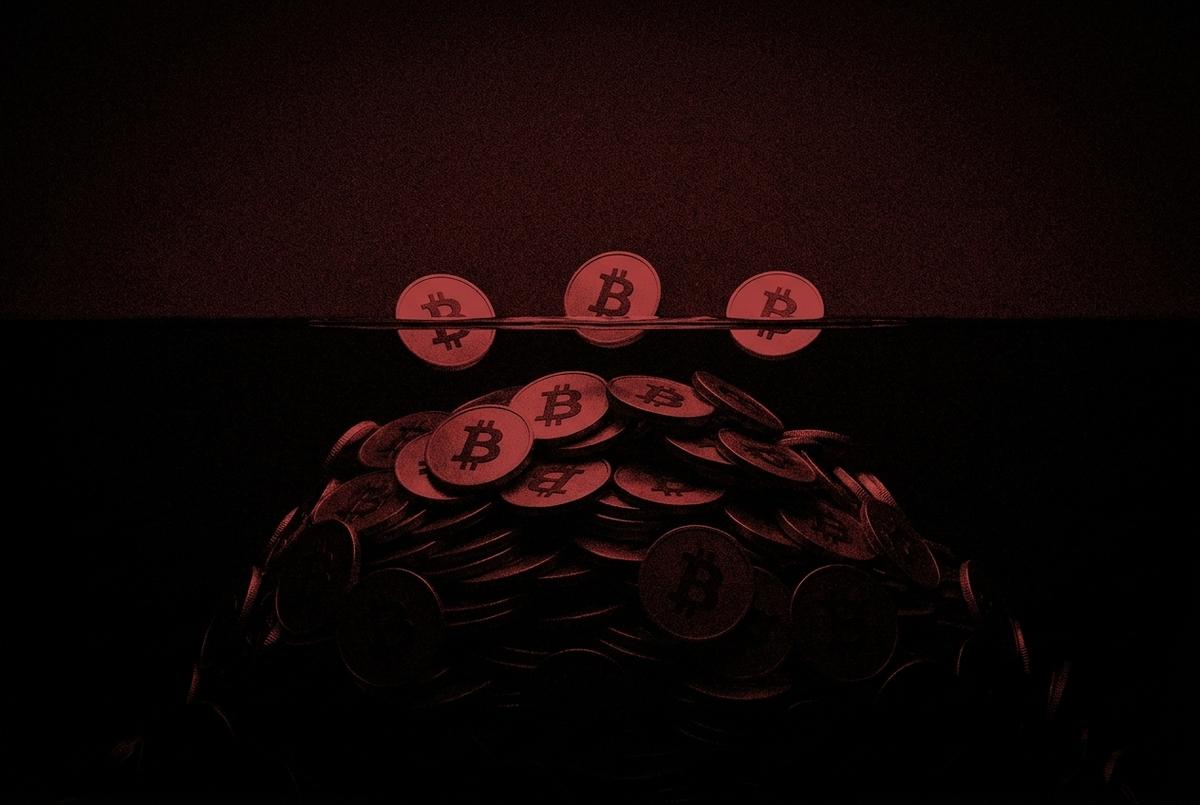
Bitcoin's leverage has been flushed out. After roughly $10.7 billion in crypto-wide liquidations across two weeks, futures open interest fell 12% to $29.3 billion, its lowest since early March, and the pressure has shifted to holders who bought higher and now sit on losses.
Key Facts
- Bitcoin futures open interest fell 12% to $29.3 billion in the week to Nov. 23, its lowest since early March, per Glassnode's Nov. 23 Market Pulse.
- Crypto-wide liquidations reached $4.93 billion in the week to Nov. 22, including $3.75 billion from long positions, after nearly $5.8 billion the week before, per DWF Labs.
- US spot Bitcoin ETFs lost about $1.79 billion in the week of Nov. 16 to 20, a fourth straight week of net redemptions, per SoSoValue data.
- Supply in profit fell to 47.3% from 54.2%, leaving 52.7% of circulating coins at a loss or near breakeven, per Glassnode.
- The level to watch is the $62,000 to $66,000 support zone, where a daily close below could open a move toward $53,700, per Glassnode.
What the Leverage Flush Looks Like
Two independent data sets agree that borrowed money has left the market. Glassnode's Nov. 23 Market Pulse put Bitcoin futures open interest at $29.3 billion, down 12% on the week and the weakest reading since early March. DWF Labs' coin-denominated measure tells the same story: open interest fell to about 639,900 BTC on Nov. 22 from 712,800 BTC on Nov. 13, a 10.2% decline.
The unwind shows up in what traders pay to stay long. Long-side funding payments fell 53.6% to $803,900, so holding a bullish perpetual position now costs roughly half what it did a week ago. Perpetual cumulative volume delta, which tracks the balance of aggressive buying and selling, moved from negative $1.5 billion to negative $486.5 million, and spot CVD from negative $170.8 million to negative $120.9 million. Both remain negative: sellers still have the upper hand, just with less force behind them.
Options traders are buying protection rather than betting on a bounce. The 25-delta skew, a measure of how much more traders pay for downside protection than for upside bets, rose to 17.4% from 14.4%, its highest since mid-July. Glassnode also noted that realized capitalization, the value of the supply at the price it last moved, contracted 0.93% over the month against 0.06% a week earlier, its weakest reading since July.
The drop was not crypto-only. In the same week the S&P 500 fell 8.6% and gold dropped 9.5%, per DWF Labs, while total crypto market capitalization slid 7.08% to $2.14 trillion. Bitcoin closed the week down 6.88% at $60,822, its seventh straight weekly loss, a run last matched in spring 2022. It fell near $55,100 over the weekend, its weakest since September 2024, then recovered above $60,000.
It echoes the last big flush: after the $19 billion liquidation crash, leverage had still not returned a year later.
Why the Pressure Moved to Holders
With less leverage in the system, the coins most likely to be sold are the ones bought at higher prices. Supply in profit fell to 47.3% from 54.2%, leaving 52.7% of circulating coins at a loss or near breakeven, per Glassnode. Short-term holders, or recent buyers, show net unrealized profit and loss of negative 18.3%, the lowest since mid-June.
The share of coins in recent hands is rising. The ratio of short-term-holder supply to long-term-holder supply climbed from 15% to 15.5%, its highest since late February. More coins in jumpy hands means more supply that can hit the market on any bounce.
The gap between price and cost explains the risk. Glassnode's short-term-holder cost basis sits at $74,100, the breakeven for recent buyers overall, well above where Bitcoin trades now. Miners are part of the same picture: Glassnode said MARA and Riot sold about 28,000 BTC in the month, while Strategy kept buying.
ETF Outflows Hit a Fourth Straight Week
The spot funds have become the clearest source of selling. US spot Bitcoin ETFs lost about $1.79 billion in the week of Nov. 16 to 20, the third-largest weekly outflow since the funds began trading in January 2024 and a fourth straight week of net redemptions, per SoSoValue data. The record week remains $2.61 billion in the week ended Feb. 28, 2025, with the week ended June 26 second.
BlackRock's iShares Bitcoin Trust (IBIT) drove most of it, with $1.37 billion, about 76% of the weekly total. On Thursday it recorded $541.1 million in outflows, passing its previous daily high of $528.3 million from Jan. 30; it broke that record again on Friday with $544.7 million, a two-day total of $1.09 billion.
Over four weeks, investors pulled a net $4.34 billion, taking year-to-date net flows to roughly $3.8 billion in the red. November's outflow reached about $4.14 billion through Friday, roughly 8% below June's record $4.51 billion for a month, though trackers differ on the exact month-to-date total. Total Bitcoin ETF net assets stood at $71.35 billion on Friday, down from about $110 billion in mid-September.
The selling carried into the new week: the funds recorded a net $569.7 million outflow on Monday, Nov. 23, a fifth straight trading day of redemptions. Trading volume across the funds rose 22% to $15.4 billion from $12.6 billion a week earlier, so more money changed hands even as the net flow stayed negative.
Glassnode put the ETFs' market-value-to-realized-value ratio at 0.97, which places the average ETF holder below their estimated cost basis, the same underwater problem visible on-chain. Spot Ethereum ETFs had it worse: $314 million left in the same week, an eighth straight negative week.
The Levels That Decide What Comes Next
Glassnode's Nov. 17 report mapped the prices that matter. The $62,000 to $66,000 zone is the only strong support below the market, formed at the August low and holding about one-fifth of short-term holders' coins. A daily close below it could trigger a rapid decline toward the realized price of $53,700, the average price at which coins last moved.
Above the market, $74,100 marks the breakeven for recent buyers overall, the level where selling pressure from that group would ease. The $58,500 June low is another line to watch. Glassnode also noted the area at $60,000 and below has drawn the largest buy orders since August.
Flows decide the direction from here. Wintermute's bar for calling a turnaround is several consecutive weeks of net inflows into the ETFs paired with growth in the stablecoin supply, and stablecoin supply has recently declined. Glassnode tied that to yields: three-month Treasury yields have risen about 45 basis points over 90 days, pulling money away from stablecoins.
For now, the leverage that powered earlier rallies is gone, and the coins most likely to be sold sit with buyers who paid more than today's price. The next tests are whether Bitcoin holds the $62,000 to $66,000 zone on a daily close, and whether ETF flows stop bleeding long enough to meet the bar Wintermute set for a turnaround.

Bikash Deka
Bikash Deka is a crypto and Web3 analyst and writer focused on making blockchain, cryptocurrency, and digital asset developments easier to understand. His work covers crypto markets, emerging blockchain projects, industry trends, and major developments across the digital asset ecosystem. With a background in Technology and Web3, Bikash combines analytical research with clear, beginner-friendly writing. He follows market movements, evaluates industry developments, and turns complex crypto topics into accessible insights for readers. At Altcoin Buzz, Bikash contributes research driven news and educational content designed to help readers better understand what is happening in the fast-moving world of cryptocurrency and blockchain.
More from BikashNext up

Strategy Bought 457 BTC, Spends $212M on STRC Buybacks
Strategy purchased 457 Bitcoin for $29.6 million between November 16 and November 22, 2026, bringing its total holdings to 851,305 BTC.
 BTCMSTR
Related
More in Crypto NewsRelated
Why Did 11,000 BTC Move to Kraken During Bitcoin's Selloff?
BTC
Can Bitmine Reach 5% of Ethereum Supply? It Is 24,436 ETH Short
 ETHBTC
North Korea Moves $247M From Binance Hack Into Bitcoin Coinjoins
BTCETH
ARK Withdraws Two Crypto ETF Filings as Bitcoin Rebounds From $55K
BTC