Ethereum Foundation Flags AI as Bigger Threat Than Quantum Computers
Ethereum Foundation doubled its security team and named AI a more urgent threat to crypto's cryptography than quantum computers, after an AI-assisted proof.

By Bikash DekaAnalyst
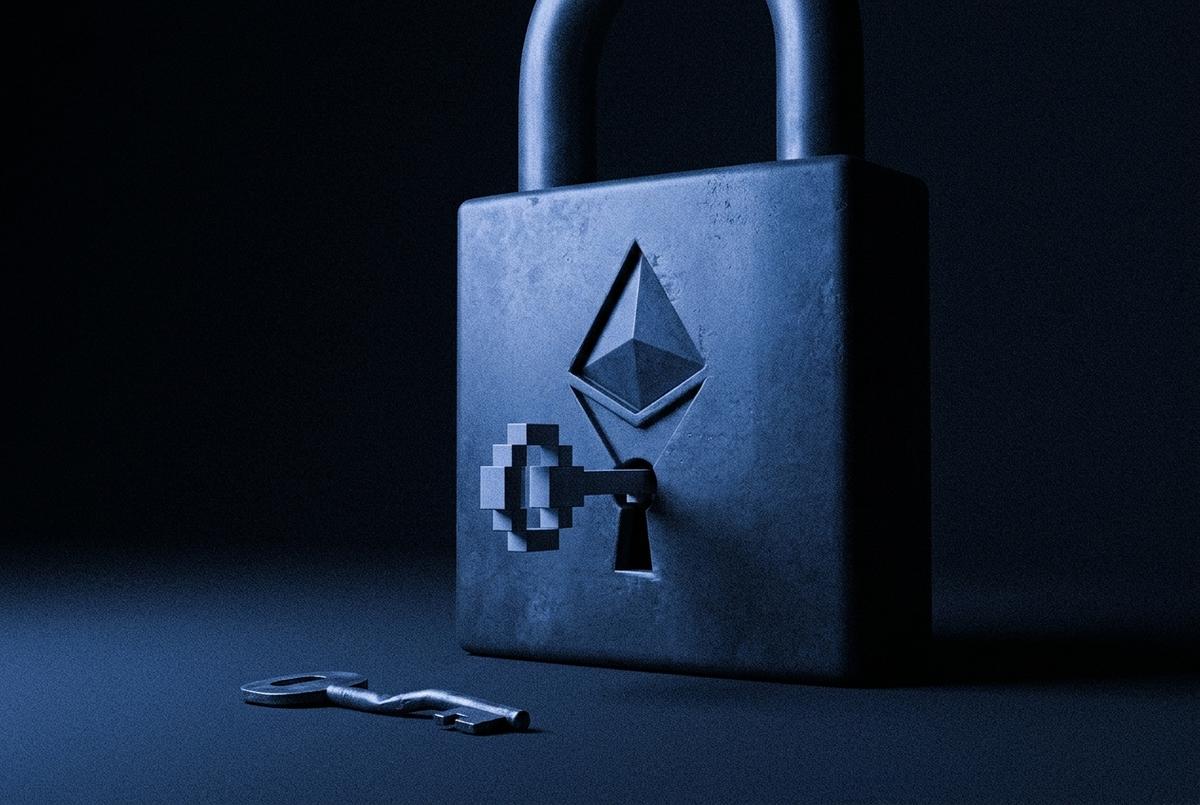
The Ethereum Foundation has doubled the size of its protocol security team and made strengthening Ethereum's cryptography its highest priority, saying AI could undermine the mathematical foundations of the network before quantum computers get powerful enough to do it.
The Foundation has spent years planning mitigations against quantum computers. It now says AI is the more urgent of the two risks.
- The Ethereum Foundation doubled its protocol security team and, in a post published on 23 November, called AI a more urgent risk than quantum computers.
- Anthropic mathematician Levent Alpöge released a Claude-assisted proof of the Riemann Hypothesis on 20 November, and the Lean community matched the theorem against Mathlib's statement of it.
- The Foundation wants validators to sign with hash-based keys so finality no longer depends on elliptic curves, with December 2029 as its internal deadline.
"Recently AI emerged as a more urgent risk," Ethereum Foundation researcher Kev Wedderburn wrote in the Foundation's blog post.
The examples it gives are about software flaws. Models are already finding bugs in production software faster than people can review them, including thousands in the Linux kernel, one of the most scrutinised codebases in the world, the Foundation wrote.
A Proof Arrived on 20 November
The warning came days after an AI-assisted proof of the Riemann Hypothesis. Anthropic mathematician Levent Alpöge released it on 20 November 2026 as a Lean library of 17 million lines, software that checks a proof step by step.
"I believe I have, working with Claude, discovered a proof of the Riemann Hypothesis," Alpöge wrote in a four-page note, adding that the method also resolves the broader Generalized Riemann Hypothesis. He says he published only the Lean version rather than a long document.
The Lean community says two independent tools confirmed that the theorem proved in his library is exactly Mathlib's statement of the Riemann Hypothesis, and the exported proof was checked by Lean's official kernel and other checkers. The Ethereum Foundation's post called it the most famous open problem in mathematics.
His claim surfaced one day after Anthropic began trading on Nasdaq on 19 November, after raising $81.34 billion. The Clay Mathematics Institute lists the Riemann hypothesis among its Millennium Prize Problems, each carrying $1 million, and requires a solution to be published in a qualifying outlet, survive at least two years of scrutiny and earn general acceptance before a prize is considered.
What the Lean check covers is narrow. It certifies the statement and the proof, not their consequences. Bitcoin's transaction signatures rest on elliptic curve cryptography, where a public key is easy to derive from a private key but the reverse is meant to be infeasible, and nothing in the record describes a working method for attacking it.
Hash-Based Keys Would Replace Elliptic Curves
The Foundation's answer is to move Ethereum away from elliptic curves. Its plan is for validators to sign with hash-based keys so finality no longer depends on them.
It called the change harder than the Merge. At Devcon in Mumbai, Justin Drake put forward December 2028 as a target, with 2029 still the Foundation's internal deadline and a timeline review planned for January.
That review is the next dated step, and it decides whether the 2028 target replaces the 2029 deadline.

Bikash Deka
Bikash Deka is a crypto and Web3 analyst and writer focused on making blockchain, cryptocurrency, and digital asset developments easier to understand. His work covers crypto markets, emerging blockchain projects, industry trends, and major developments across the digital asset ecosystem. With a background in Technology and Web3, Bikash combines analytical research with clear, beginner-friendly writing. He follows market movements, evaluates industry developments, and turns complex crypto topics into accessible insights for readers. At Altcoin Buzz, Bikash contributes research driven news and educational content designed to help readers better understand what is happening in the fast-moving world of cryptocurrency and blockchain.
More from BikashNext up
Why Is Crypto Up Today as Bitcoin Nears $62,000?
Bitcoin traded near $62,000 on 27 November, up just over 2% in 24 hours, as short liquidations and a tech rebound lifted crypto. HYPE led with a near 10% gain.
 BTC
 ETH
Related
More in Crypto NewsRelated
Bitcoin ETFs Shed $5.39B in November as Borrowers Cut Debt
BTCETH
Crypto Liquidations Hit $478M as Bitcoin Longs Take the Biggest Losses
BTCETH
Ethereum ETFs Lose $523 Million as ETH Falls Below $1,650
ETH
BTCS Sells 27,300 ETH to Repay $43.8 Million in Aave Debt
ETHBTC