ZEC Drops 10% a Day After Developers Urge Sapling Migration
Zcash fell 10.2% to $692.61 on 27 November, a day after Zakura urged holders to leave the Sapling pool. No source has linked the warning to the drop.

By Bikash DekaAnalyst
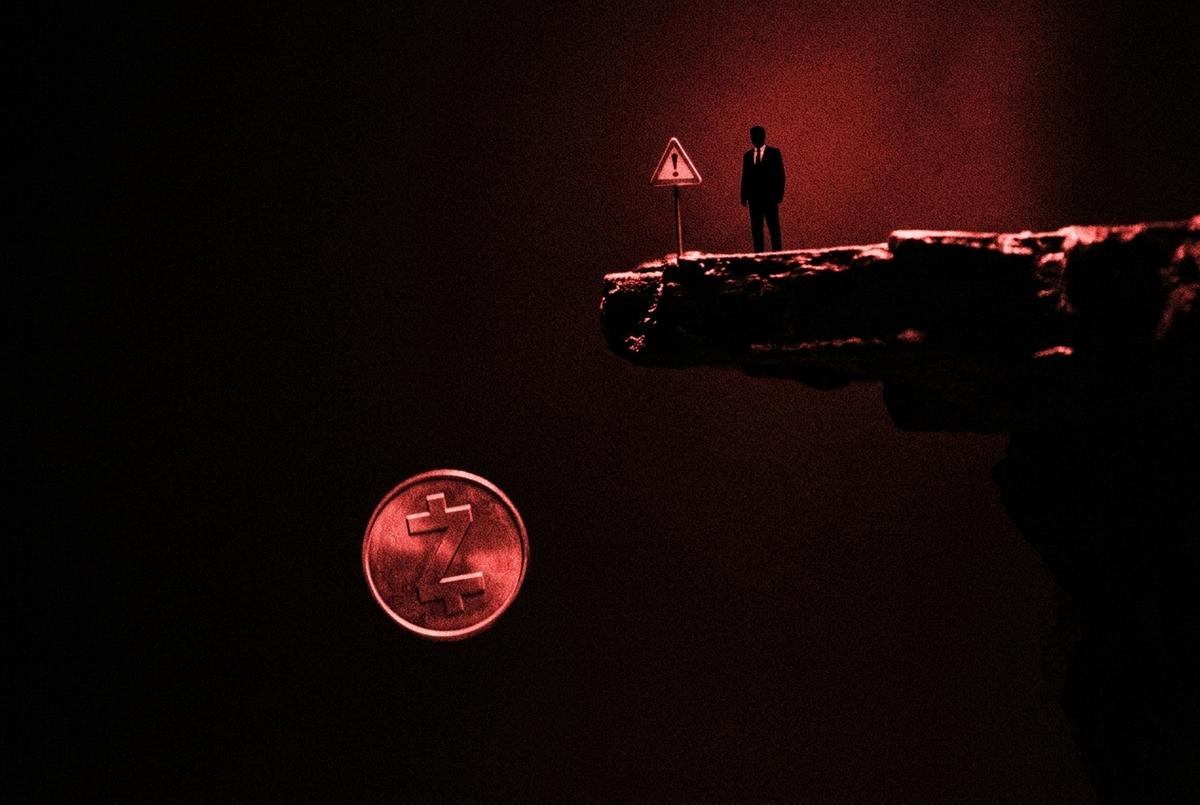
Zcash (ZEC) fell to $692.61 early on 27 November, down 10.2% from $771.41 at the 26 November close. The move landed roughly a day after a Zcash full-node team called for speeding up the retirement of Sapling, the network's older shielded pool, but no source has shown that the proposal caused the drop.
- The news: ZEC dropped 10.2% over 24 hours to $692.61, measured early on 27 November.
- The key figure: the token closed at $771.41 on 26 November, before the fall.
- What comes next: Zakura's call is a recommendation, not a live change, and any Sapling shutdown would arrive through a network upgrade.
What Zakura Proposed
Zakura published an X Article titled "Riemann is solved. Zcash adapts." on 26 November. Its recommendation is blunt: "our recommendation is to accelerate Sapling's planned deprecation. This means that payments into Sapling should be disabled by a network upgrade."
The idea is to make Sapling withdraw-only. New deposits would stop, and the roughly 400,000 ZEC sitting in the pool, about 2% of supply, would be encouraged to move out while withdrawals stay open.
Why Pairings Are the Concern
Sapling's zero-knowledge proof relies on pairings, Zakura says. A break in pairings would let an attacker forge proofs, which is why the team says the 400,000 ZEC in Sapling is at risk.
That scenario is speculative. Zakura's post ties its own risk assessment to "the rumor mill" suggesting AI labs have made breakthroughs in integer factorization, alongside what it describes as the proof of the Riemann hypothesis. It gives no evidence of a working attack, and none is known.
Zakura argues the pool is barely used. Fewer than 2.6% of Zcash transactions over the last 30 days touched Sapling, and 66% of those were known miner flows, according to the post. Even assuming a billion-times improvement in attack methods, it estimates that breaking the curve behind Sapling's proofs would cost $1 trillion to $300 trillion.
What to Watch
Zakura's call is a recommendation, not an activated change. Disabling payments into Sapling would need a network upgrade, so the next signal is whether the proposal gathers support from Zcash's developers and node operators.
On the price, the 10.2% drop is measured and the cause is not. No primary source read for this article connects the fall to the Sapling proposal, and no competing explanation is confirmed either. Until that changes, treat the timing of the warning and the drop as just that: timing.

Bikash Deka
Bikash Deka is a crypto and Web3 analyst and writer focused on making blockchain, cryptocurrency, and digital asset developments easier to understand. His work covers crypto markets, emerging blockchain projects, industry trends, and major developments across the digital asset ecosystem. With a background in Technology and Web3, Bikash combines analytical research with clear, beginner-friendly writing. He follows market movements, evaluates industry developments, and turns complex crypto topics into accessible insights for readers. At Altcoin Buzz, Bikash contributes research driven news and educational content designed to help readers better understand what is happening in the fast-moving world of cryptocurrency and blockchain.
More from BikashNext up
Why Is Chainlink Up 10% as Fidelity Files for a LINK ETF?
Fidelity filed an S-1 with the SEC on Nov. 25 for a spot Chainlink ETF that would trade as FLNK on Nasdaq. LINK rose about 10% as the filing landed.
 LINK
 AAVE