Zcash Gets a One-Person, One-Vote Alternative to Coin-Based Governance
Zcash Agora, an unofficial one-person-one-vote poll, opened beside Zcash's coinholder vote. Its test on the five NU7.1 questions closes 30 November 2026.

By Shashwat GuptaFounder
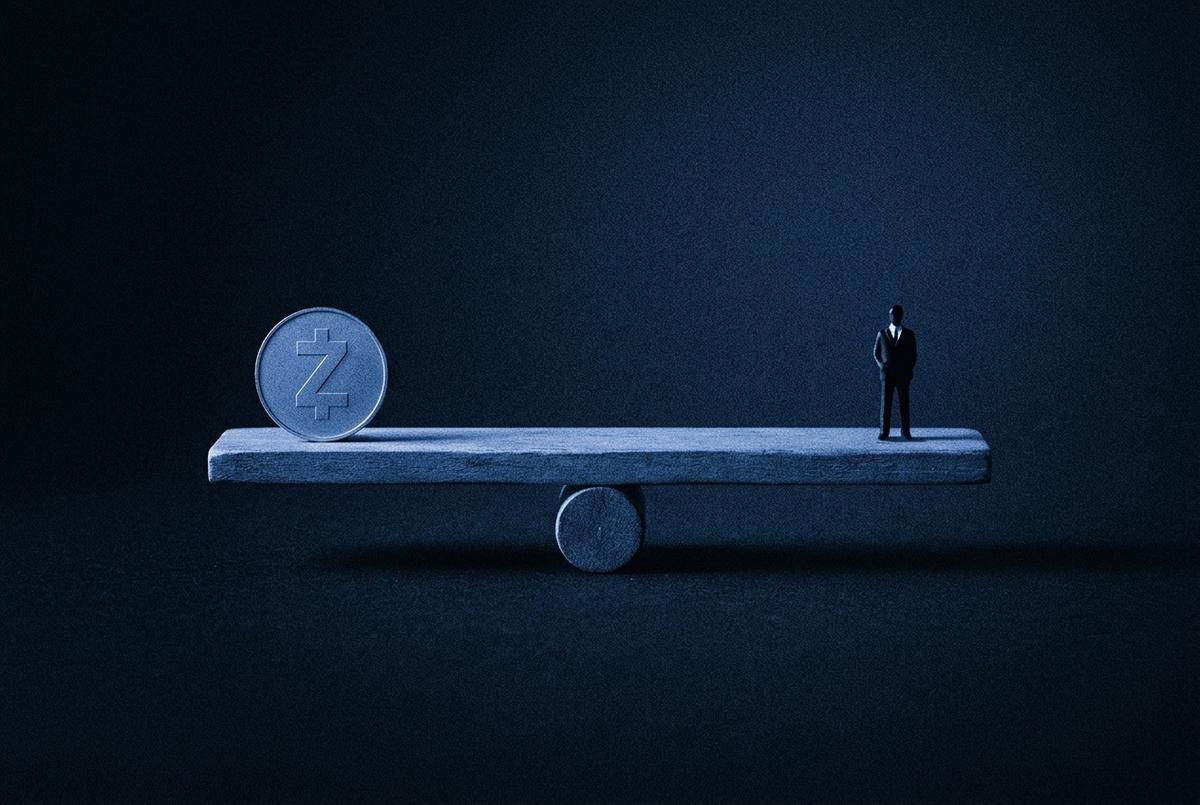
Zcash has a new way to vote that counts people instead of coins. On 16 November 2026, community member nikkolasg posted Zcash Agora to the Zcash Community Forum: an unofficial, one-person-one-vote poll running the same five NU7.1 questions as the coinholder poll that opened the same day.
- The news: Zcash Agora is an unofficial one-person-one-vote poll running beside the coinholder vote on the five NU7.1 questions, and its own post says it decides nothing.
- The figure: No official Zcash poll has ever had more than about 150 human voters; the largest was the December 2025 ZCG election, with 145 ZCAP members voting.
- What happens next: Agora's NU7.1 poll closes on 30 November 2026 at 23:59 UTC, and results go up on its site at the close.
Agora does not replace the coinholder poll or the Zcash Foundation's ZCAP vote. It runs beside them and adds a second tally: a count of people next to the count of coins. nikkolasg, who built it on his own time, wrote on the forum: "Disclosure: I work at ZODL. This is a personal project, built on my own time; ZODL has no part in it."
Agora Adds a Head Count Beside the Coin Count
Zcash governance polls count coins. A vote's weight is what the wallet holds, so the result measures ZEC, not people. Agora adds the other number. Its repository puts the aim in one line: "One passport, one voice. Anonymous polls for the Zcash ecosystem, counted per head and shown next to the count per coin."
The test poll asks the same five questions as the official ZCAP poll: whether to wind down Zcash Community Grants and send remaining funds to the Future Dev and Legal Defense Fund lockbox, whether to keep the 8% funding stream unchanged through the November 2028 halving, whether to create the Zcash Adoption Pool (ZAP), whether to keep ZCG's existing funding and operations as they are, and whether to cut Zcash's target block time from 25 seconds to 20 seconds, assuming that can be done safely in a network upgrade.
Agora's first poll, a test on the Zcash Shielded Assets question, opened on 10 November 2026 at 00:00 UTC and closes on 20 November 2026 at 12:00 UTC. The NU7.1 poll runs beside the coinholder round that opened on 16 November and closes on 30 November 2026 at 23:59 UTC.
One Passport, One Vote, Without It Leaving Your Phone
Voting takes a passport, though not in the way that sounds. You prove once, in the ZKPassport app on your phone, that you hold a valid, unexpired biometric passport, of any country, at any age. What leaves the phone is a zero-knowledge proof and a salted number unique to the document, so one passport registers once, and no name, nationality, birth date or photo travels with it. The app needs an NFC phone and a face match.
The post notes that ZKPassport has been used elsewhere, saying more than 17,000 people used it in Aztec's token sale, a figure that comes from the post rather than from ZKPassport's own pages.
That passport check is the trade Agora makes. It is what stops one wallet holding 1,000 ZEC from counting as 1,000 people, the imbalance as one post on the thread puts it: under coin voting, one person with 1,000 ZEC carries the same weight as 1,000 people with 1 ZEC each. It also leaves people out, since the proof excludes anyone without a biometric passport or an NFC phone.
Ballots Sealed Until the Close, Countable by Anyone
Once registered, your ballot is encrypted to a future round of drand, a randomness beacon run by Cloudflare, EPFL, Kudelski and a dozen other operators, in production for more than six years and used by Filecoin, among others. The encryption locks the ballot until that round arrives, which is when polling closes.
Ballots arrive over public Nostr relays, so the server never learns who cast them. isoloir, the protocol behind Agora, specifies that the server cannot read a ballot before the close, change one, or add its own, because every ballot and registration carries a proof anyone can re-verify. Registrations, ballots, decryptions and results all go into one public append-only log per deployment, signed and timestamped, mirrored as static files. The vote page has a button that recounts it in your browser.
The mirror repository is that record kept in the open. The ingest server pushes after every checkpoint, and the mirror holds the latest signed checkpoint, every checkpoint, every registration and ballot as received, the ledger setup, registries, polls, the OpenTimestamps proofs that anchor checkpoints in Bitcoin, and the compiled Noir circuit whose hash each poll pins.
2.18 Million ZEC, and 145 Voters
The case for Agora rests on a size mismatch. In the Q3 retroactive grants round, about 2.18 million ZEC, roughly $2.75 billion at the time, voted on every proposal, Zec.rocks operator emersonian wrote on 14 November 2026. His tables put the closest Q3 result at 373,764 ZEC and the median result at about 1.73 million ZEC, using a ZEC price of $1,262.
Against that, he counts the people. No official Zcash poll has ever had more than about 150 human voters, the largest being the December 2025 ZCG election with 145 ZCAP members voting, and ZCAP has never had even 200 members. He added that at the time he wrote, 57,312 wallets were connected to Zec.rocks' global servers.
Agora's own site makes the argument in sharper numbers: ten ballots once carried 46% of the weight in a Zcash poll, the 98.6% vote against shielded assets was 7% of the supply cast in 204 ballots, and a Foundation panel of 99 voted 70% the other way. The forum, it notes, has 842 active members. From the Q3 tallies, the Agora post works out that changing most of the results would have taken 172,623 people holding 10 ZEC each, all voting the same way.
Two caveats sit over those figures. The $1,262 price and the $2.75 billion valuation are emersonian's own, not checked against a market data page. And how many people have registered or voted in Agora itself is not yet known, because the site publishes results only at the close.
What Happens Next
Agora's NU7.1 poll closes on 30 November 2026 at 23:59 UTC, with results posted on its site. The ZSAs test poll closes on 20 November 2026 at 12:00 UTC.
The Foundation's ZCAP poll runs to 2:59 UTC on Tuesday 1 December 2026. It is one of several running in parallel, each group considering the same five questions, and the Foundation says results will be compared across groups once polling concludes. That is where a head count and a coin count would meet.
Two Alternatives to the Passport Check
Agora is unofficial by design, and its own post says it decides nothing. Its eligibility rule is its sharpest edge: a person without a biometric passport or an NFC phone cannot vote, so the head count measures passport holders with the right hardware, not Zcash users as a whole.
The post floats two passport-free routes. One is a TLSNotary committee, where a few Zcash organizations would each run a notary and a registration would count once two of them signed. The other is a registry signed daily by the forum, covering accounts with enough standing, proved in zero knowledge. Both are ideas on a forum post, not shipped features.

Shashwat Gupta
Shashwat Gupta is an entrepreneur, CEO and co-founder of the online media portal, Altcoin Buzz. Shash has been a crypto enthusiast since 2015 and entered the emerging cryptocurrency space full time in early 2017. His business expertise and extensive knowledge in the crypto space have helped shape Altcoin Buzz to be what it is today.
More from ShashwatNext up
Gnosis Safe Wallet Loses $6.45M With No Owner Signature
A Gnosis Safe wallet lost about $6.45 million on 16 November when funds left through a Zodiac Roles permission, not an owner signature.
 XMR
Related
More in Crypto NewsRelated
Zcash and Monero Face Exchange Delistings, Privacy Coins Under Pressure
XMR ZEC

Injective, Stellar, Zcash Votes and Major Token Unlocks: Key Crypto Events This Week
Hedera Schedules 40-Minute Mainnet Upgrade to v0.79 on November 18
Zoom, CNN & Ledger Caught in Major Crypto Malware Attack Across 178 Sites
 BTC
 ETH